
Tracking the Source: A Smarter Approach to Beach Water Quality

Summer in Canada means time at the beach. Whether you're swimming, paddling, wading, fishing, or simply enjoying the shoreline, water quality is top of mind for residents and visitors alike. When beach water quality advisories are issued, one of the biggest questions is often: Where is the contamination coming from?
That's where Microbial Source Tracking (MST) comes in.
Looking Beyond Traditional Water Testing
Routine beach water monitoring typically focuses on detecting bacteria that indicate fecal contamination, such as E. coli. While these tests can confirm that contamination is present, they can't determine the source.
This presents a challenge for beach managers and environmental professionals. Is the contamination coming from human wastewater? Agricultural runoff? Wildlife? Domestic animals?
Knowing the source is critical for taking the right corrective action.
Microbial Source Tracking (MST) is an advanced molecular tool that helps answer that question. By identifying host-specific bacteria associated with different animals and humans, MST can pinpoint the likely origin of fecal contamination in environmental waters.
How MST Works
Many bacteria in the genus Bacteroides live naturally in the digestive systems of humans and animals. Certain strains are highly host-specific, making them excellent markers for identifying sources of fecal pollution.
At RPC, scientists use real-time quantitative PCR (qPCR) technology to detect these host-specific markers. The MST assays target bacteria associated with:
Humans
Ruminants such as cattle and deer
Pigs
Dogs
Gulls
Canada geese
These molecular markers are designed to specifically identify fecal contamination from their target hosts without cross-reacting with other species.
A Real-World Application at Oak Bay Provincial Park Beach
RPC recently applied MST techniques to investigate fecal contamination at Oak Bay Provincial Park Beach in New Brunswick. A total of 79 beach water samples were collected from five monitoring stations throughout the beach season and into the fall.
Map of Monitoring Stations and Sampling Locations for Oak Bay
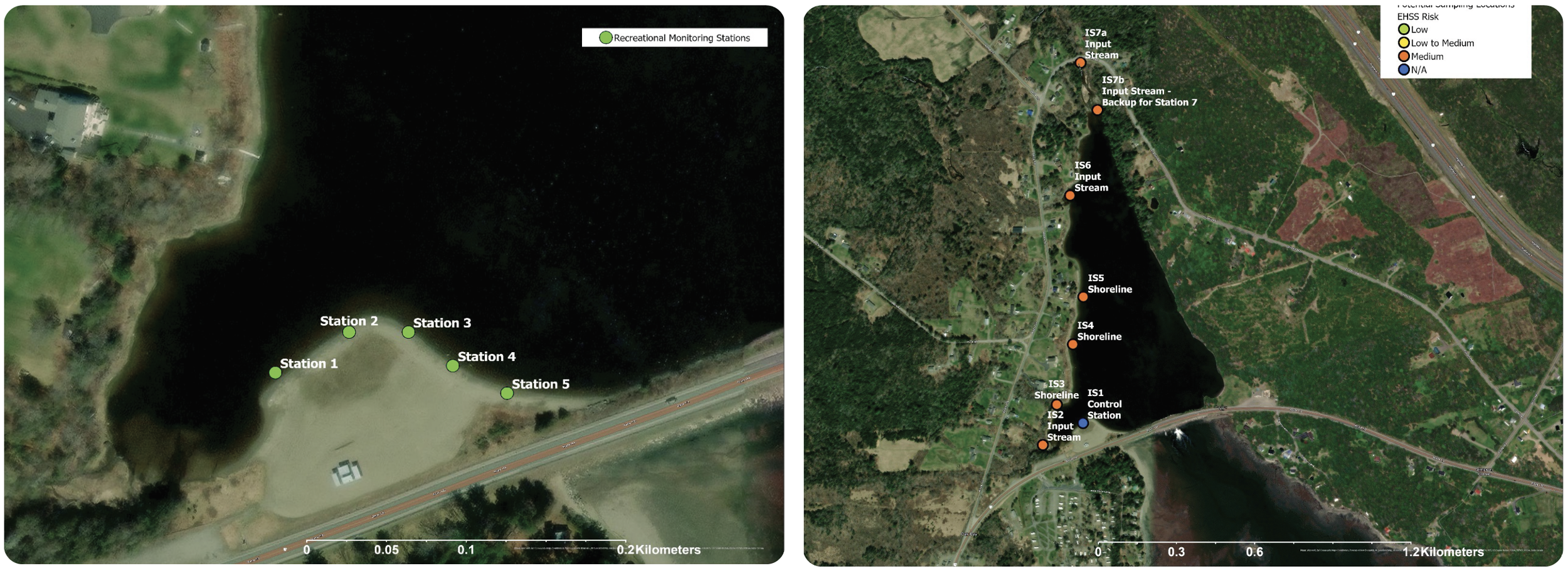
The results revealed that contamination sources varied considerably over time and location.
What Did We Find?
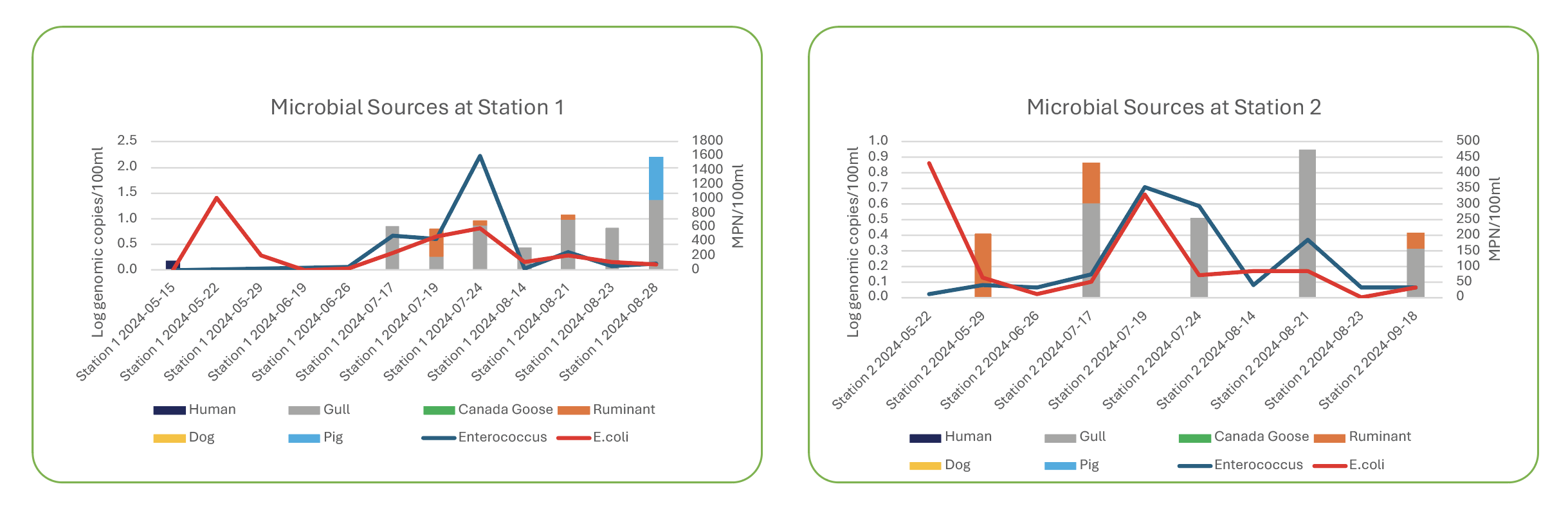
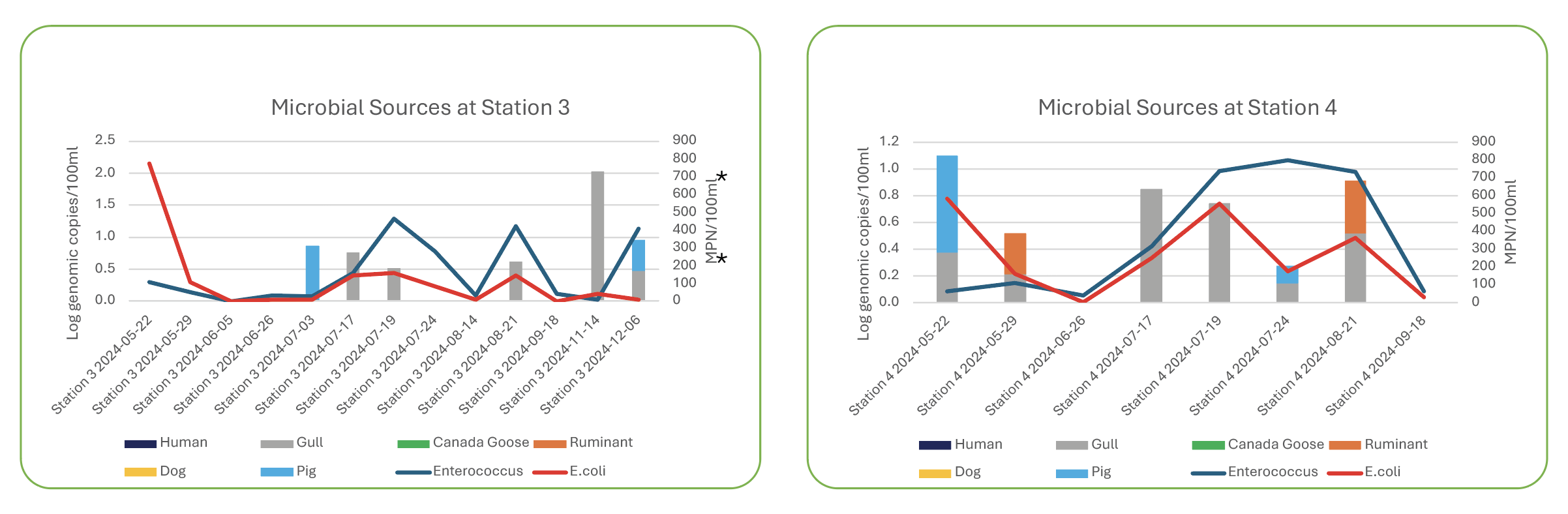
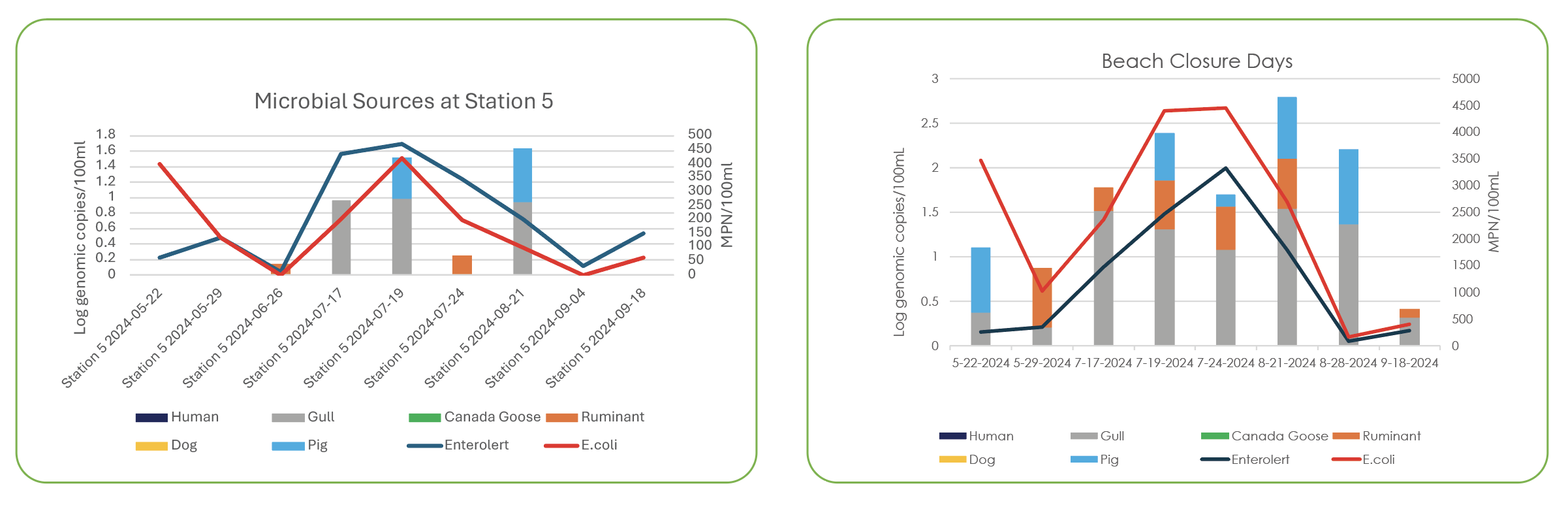
Of the seventy-nine beach water samples collected from five different stations at Oak Bay Provincial Park Beach, NB, we found that gull, ruminant, and human specific markers were detected in approximately 43%, 21.8% and 12.5% of the samples, respectively. Interestingly, the human marker was not the predominant one detected and was primarily present from the end of the beach season into late fall, while the ruminant, gull, and pig markers were mainly detected during the beach season. Dog and goose markers were not detected in any of the water samples collected for this study. The pig-specific faecal bacteria were detected at a very low level at station 1, 3, 4, and 5 mostly during the beach exceedance days. Faecal bacteria from pigs and geese were not observed or were very low in comparison to the other sources. Some stations (station 1-5) had high amounts of source specific faecal bacteria especially during the months of July and August.
Supporting Better Water Management
Microbial Source Tracking is becoming an increasingly valuable tool for environmental monitoring programs because it:
Distinguishes between human and animal sources of fecal contamination
Enhances traditional water quality monitoring programs
Supports evidence-based decision making
Helps identify pollution sources more quickly
Improves risk assessment and public health protection
Supports regulatory compliance and environmental stewardship
As recreational water use continues to grow and environmental pressures increase, advanced tools like MST are helping communities better understand and manage the factors affecting beach water quality.
Service Through Science
At RPC, our team combines accredited testing, molecular biology expertise, and innovative analytical approaches to help clients solve complex environmental challenges.
Microbial Source Tracking is one example of how advanced science can move beyond identifying a problem to understanding its cause, providing the information needed to develop effective, long-term solutions for protecting water resources and public health.
To learn more about RPC’s services, visit: https://rpc.ca
Questions? Reach us by email: info@rpc.ca
Acknowledgements
This work was supported by the New Brunswick Department of Environment and Local Government through the Environmental Trust Fund (ETF), Project No. 240231. RPC gratefully acknowledges the contributions of the Business Growth and Excellence Team in supporting the communication of this research.
Thank you to our study contributors:
This study was conducted through a collaboration between the New Brunswick Research and Productivity Council (RPC) and the Department of Environment and Local Government (DELG).
RPC: Corrie Maston, Attiq Rehman, Nadine Godin, Mathew Poole, Michael Lawlor, Diane Botelho
Department of Environment and Local Government (DELG): Water Sciences Section